.svg)
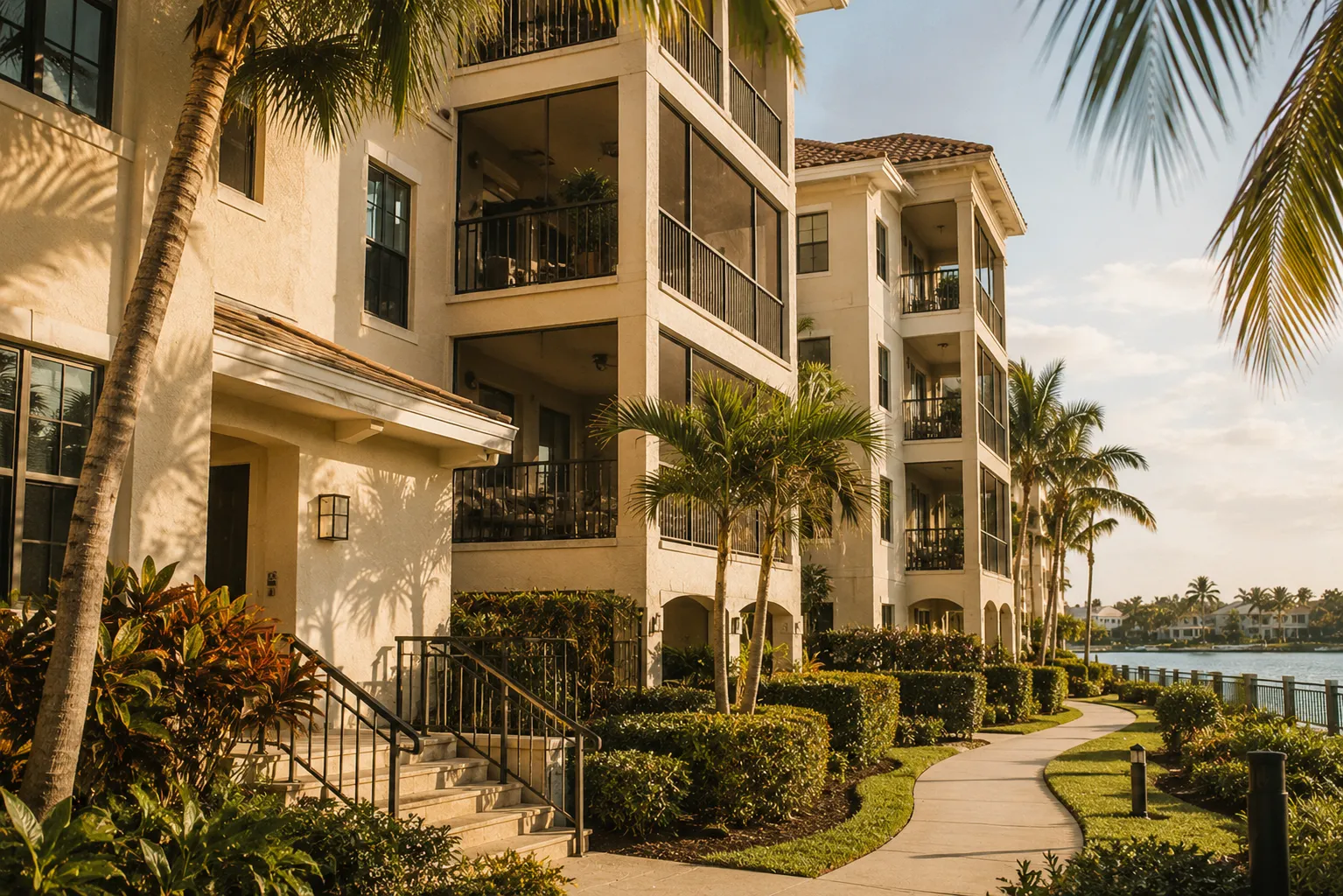
Condo Insurance Quotes
Competitive prices on the coverage you need.



How to Get a Condo Insurance Quote
Enter your address
Tell us where you live and a little about your place: we pull the rest, so you're not digging through paperwork.
Compare quotes
See tiered options - minimum, standard, and enhanced - from 20+ carriers, with what's covered and what's not laid out clearly.
Talk to one local agent
A single licensed HoneyQuote agent guides you to your best policy and coverage. One human who knows your file — not six strangers who don't.
What you’ll need for an accurate quote
- Unit address, floor, and whether you're on the ground floor
- Square footage, year built, and construction type
- Your association's certificate of insurance or master policy declarations page — bring it if you have it, and if you don't, we'll request it
- Any interior upgrades you've paid for: flooring, cabinetry, countertops, built-ins
- A rough value for your personal property
- Whether the unit is your primary residence, a second home, or a rental
- Your current HO-6 declarations page, if you have one
Here’s What Our Insurance Can Cover for Your Condo
Your Unit, From the Walls In
Interior walls, flooring, cabinets, countertops and built-ins — the parts of the building your association's policy stops short of.
Personal Liability
If someone's hurt in your unit, you're covered for medical and legal costs.
Loss of Use
Displaced after a storm? We cover the hotel, meals, and extra living costs.
Wind, Fire & Storm
Hurricane, wind, hail, lightning, fire and smoke — usually with a separate hurricane deductible. We'll explain yours before you sign.
Personal Property
Your belongings and valuables, covered inside the unit and out.
Loss Assessment
When the association bills every owner for a shared loss, this is the coverage that answers. Most policies include only a token limit. We'll show you what yours is.
Take the guess work out of making sure you have the coverage you need.
See your insurance rates in under 30 seconds.
What Your HOA Covers, and What’s Left to You
Read your association's certificate of insurance and you'll find one of these three. Or send it to us and we'll read it, tell you which one you have, and size your coverage to match. Getting this wrong is the most common and most expensive mistake in condo insurance: carry bare-walls-level coverage on an all-in building and you've overpaid for years; carry all-in-level coverage on a bare-walls building and you're exposed for the whole interior.
Shop Average Condo Insurance Rates by State
Bundle your Condo and Auto, and Save
One agent, fewer bills, and a discount for keeping your coverage under one roof.
Bundling gets you a real discount, but the bigger win is having one person — yes, a real live person — who sees your whole picture. Your condo and your car in one place means nothing slips through the cracks between separate policies.
What you can bundle:
Condo and flood
Condo and auto
Condo, auto, and flood
Choose How Your Condo Property Is Covered
A few coverage terms decide what you're actually protected against. Here's what matters before you compare quotes.
What an HO-6 is
HO-6 is simply the industry's name for a condo owner's policy. If a lender, closing agent or association asks for "an HO-6," they mean this. It differs from a homeowners policy in one important way: it insures the inside of a unit rather than a whole building, and it assumes an association policy sits behind it.
Replacement cost vs. cash value
Replacement cost pays what it takes to rebuild your interior at today's prices. Actual cash value pays a depreciated figure. On a Florida condo interior, the gap between those two numbers has widened considerably.
What condo insurance doesn't cover
Flood is never included in an HO-6 — that's a separate policy, and it matters most if you're on a lower floor or the building's ground level. Also excluded or limited: the association's property, wear and tear, and in most cases damage from a maintenance issue you knew about.
What Affects Your Condo Insurance Rate
Two units in the same building can pay very different premiums. Your rate comes down to the building, the unit, and how you use it.
The building and your unit
- Location and wind exposure: distance to the coast, county, and flood zone.
- Your floor: ground-floor units price differently, mostly for water.
- Year built and construction: masonry versus frame, and the roof age on the building.
- Your master policy type: bare walls-in, single entity or all-in changes how much unit coverage you need — and therefore what you pay.
- Interior rebuild cost: what it would cost to replace your finishes today, not what the unit is worth on the market.
- Wind mitigation on the building: impact glass, shutters and roof attachment can lower your premium.
You and how you use the unit
- How you use it: primary residence, second or seasonal home, or rental. Each is rated differently (see chart below).
- Rental use: long-term and short-term rentals need different policies and usually cost more.
- Your claims and coverage history: past claims and any gap in prior coverage.
- Insurance score: in most states, credit-based factors play a role.
- Deductibles you choose: including the separate hurricane deductible, which is usually a percentage of your unit coverage rather than a flat amount.
- Loss assessment limit: raising it is cheap, and it changes very little on your premium.
How you use your condo changes your policy and your rate
Why Coastal Condo Owners Choose HoneyQuote
We don't dabble in flood country. We live here, and every carrier and coverage option we offer is chosen for the water your ZIP code actually sees.
We shop 20+ carriers and know which ones still write condos on the coast, down to the endorsements and exclusions. Our team can match you to the policy you need, at a price that's genuinely competitive.
We'll tell you in plain language what a policy covers and, just as important, what it doesn't, before you sign anything.
You don't have to figure this out alone. From quote to claim to renewal, you get one named local agent, not a call center and not a chatbot.
Find the policy that protects you.
See your insurance rates in under 30 seconds.
Condo Insurance Quotes: FAQs
What does condo insurance cover?
Condo insurance typically covers the interior of your unit, your belongings, your personal liability, your additional living expenses if you are displaced, and loss assessment when your condo association bills every unit owner for a shared loss. A condo policy is often called walls in coverage for exactly that reason: it starts where the building stops. Here is what each part of your condo coverage does. Dwelling coverage rebuilds the interior of your condo unit, meaning drywall, flooring, cabinets and built-ins. Personal property covers your belongings. Personal liability coverage pays the legal expenses and medical costs if someone is hurt in your unit or you damage someone else's property, including legal fees if you are taken to court. Medical payments covers emergency services and smaller medical bills for a guest injury, regardless of fault. Loss of use pays for temporary housing, meals and other living expenses if a covered event leaves your condo uninhabitable. Loss assessment coverage responds when your condo association passes a shared cost on to owners. What a condo policy does not provide coverage for is the building itself and the shared spaces, which sit on the condo master policy, or flood damage, which always needs its own policy. And if you rent your unit out, your tenant needs their own renters insurance, because your policy will never cover their belongings.
How much is condo insurance?
How much you pay for condo insurance depends on several factors, and most of them are about the building rather than your belongings. Wind exposure, your county, which floor you are on, the building's roof, your deductible amount and how much dwelling coverage you need to rebuild the interior of your unit all move your insurance rates more than square footage does. Your claims history and the safety features in the building matter too. There are a few reliable ways to save money. Choosing a higher deductible lowers your premium, though it means more out of pocket before your insurance kicks in, and a lower deductible does the reverse. Bundling with auto insurance earns a discount at most carriers, as does a monitored alarm or a sprinklered building. Rather than quote you a national average, we price your actual address across every insurance company that writes your building, so you can compare real numbers against your own insurance needs and budget.
What does my HOA's master policy actually cover?
Your HOA's master policy covers one of three things, and you cannot know which one without reading it. Bare walls in stops at your studs and leaves the entire interior of your unit to you, which means you need the most dwelling coverage of the three. Single entity covers the unit as originally built but not any upgrade you or a previous owner made. All in covers the most, including most improvements, so you need less coverage on your own condo policy. Every version of the condo master policy covers the building structure and the shared spaces. None of them covers your belongings or your personal liability as a unit owner. Send us your condo association's certificate of insurance and we will tell you which of the three you have and what adequate coverage looks like against it. Getting this wrong is the most common and most expensive mistake in condo insurance.
What is loss assessment coverage?
Loss assessment coverage is the part of your condo policy that responds when your condo association bills every unit owner for a shared loss. When a covered loss runs past the master policy's limit, or the condo master policy carries a deductible amount the association cannot absorb, that cost gets divided among the owners as a special assessment. Loss assessment coverage pays your share, up to your limit, and only when your own policy covers the cause of the loss.
How much loss assessment coverage do I need?
How much coverage you need for loss assessment is almost certainly more than your policy includes today. Most insurance policies come with only $1,000 or $2,000 by default, and assessments in Florida routinely run into five figures per condo unit. Buying the limit up is additional coverage that provides greater financial protection for very little premium, and it is usually one of the cheapest changes you can make to a condo policy. Send us your declarations page and we will tell you how much coverage you are carrying right now. Its all part of our mission to get you the best insurance quotes possible.
Does loss assessment coverage pay my association's deductible?
Loss assessment coverage often does pay your share of the condo association's deductible, and this is the scenario most owners do not see coming. Say a fire damages the roof over your building and the master policy carries a $10,000 deductible amount. The association can bill that deductible to the owners of the affected stack rather than spreading it across the whole community. Loss assessment coverage is what stands between you and that invoice. Your insurance kicks in up to your limit, and only where the loss would be a covered claim under your own policy.
Does condo insurance cover a special assessment after a milestone inspection or reserve study?
Condo insurance does not cover a special assessment for deferred maintenance or underfunded reserves, and we are not going to pretend otherwise. Milestone inspections, structural integrity reserve studies and reserve funding requirements have landed on Florida buildings that deferred maintenance for decades. Insurance responds to sudden damage from a covered peril, not to a bill for work the building always needed. What loss assessment coverage does do is make sure that when a covered loss triggers an assessment, you are not paying your share out of pocket. Two things are worth checking today, whoever you are insured with: your loss assessment limit, and whether your dwelling coverage still reflects real replacement costs for your interior at today's Florida construction prices. Plenty of owners are carrying limits set years ago, which is the quietest way to end up without adequate coverage. We will check both for free.
What is a hurricane deductible, and how is it different from my regular deductible?
Your hurricane deductible is separate from your regular deductible, and on the coast your condo policy carries both. The regular deductible is a flat dollar amount for everyday claims. The hurricane deductible applies to named storms and is usually a percentage of your dwelling coverage, commonly 2% or 5%. On $200,000 of unit coverage, a 2% hurricane deductible is $4,000 before your insurance kicks in. That deductible amount moves your insurance rates more than almost any other choice you make. A higher deductible lowers your premium and a lower deductible raises it, and for natural disasters on the coast the gap between the two can be significant. We show yours in dollars on every quote, not percentages, so you know exactly what you would pay on a covered claim.
Does condo insurance cover flood damage?
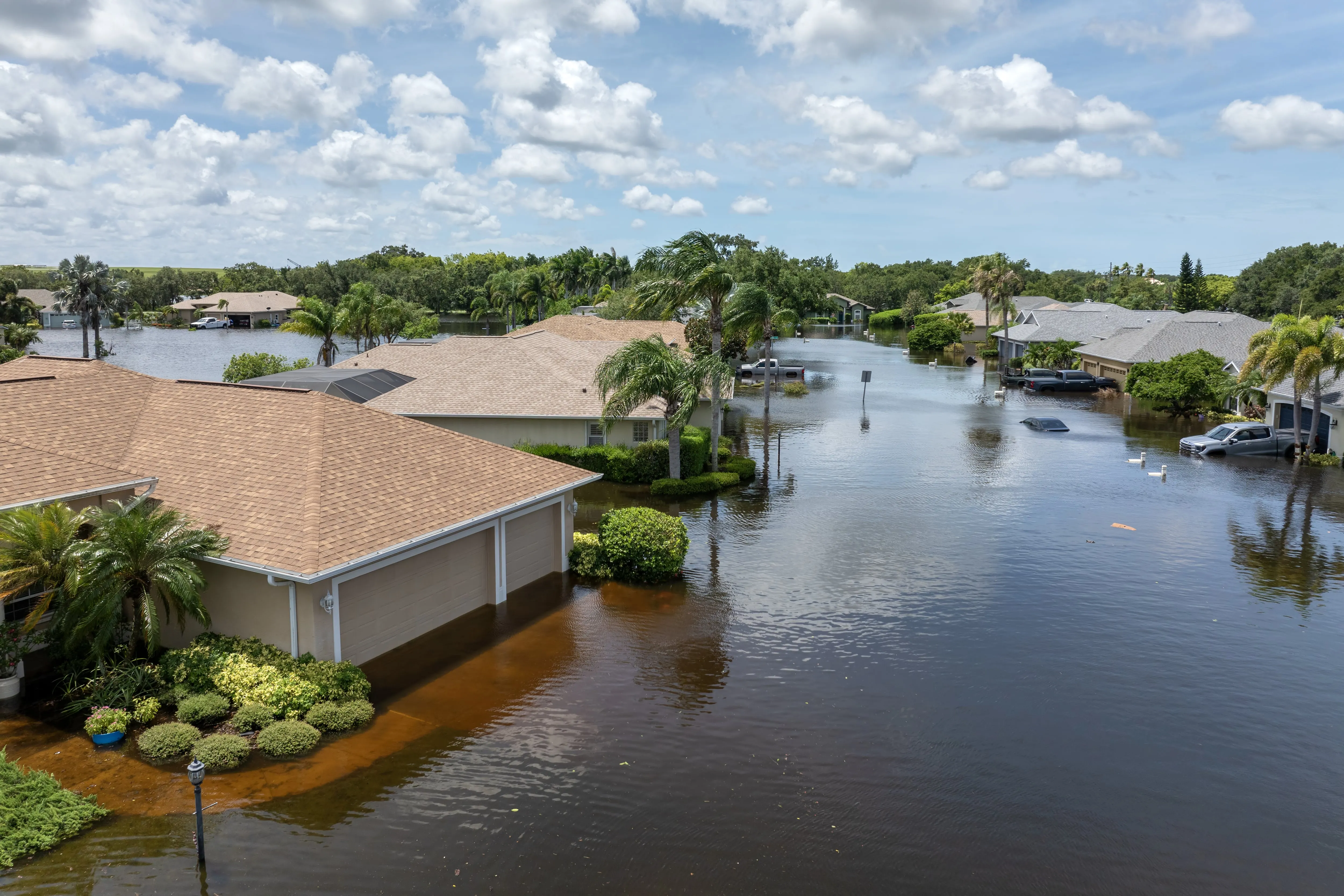
Condo insurance does not cover flood damage, anywhere, regardless of carrier, and that includes storm surge and water coming in at ground level. Flood is not a covered peril on any condo policy, so it needs its own policy. That matters most on lower floors and at ground level. One thing worth knowing: if your condo association assesses you for flood damage and you do not carry flood insurance, loss assessment coverage will not provide coverage either. Flood is often more affordable than people expect, and we write it alongside your condo insurance so there is no gap between wind and water. Of all the natural disasters that hit Florida, this is the one most often left uninsured.
Is condo insurance required?
Condo insurance is not required by law in any state. But you will almost certainly need condo insurance anyway. If you have a mortgage, your mortgage lender will require it before closing and will want proof of adequate coverage at every renewal. Most condo associations also require proof of an HO-6 in the bylaws, and some set a minimum personal liability protection limit. The real reason to carry it is simpler. Your condo association's master policy stops at your walls, and rebuilding the interior of a Florida condo is expensive.
Will you share my information with carriers and send me spam calls?
We will not share your information with carriers or send you spam calls. Your details stay with one licensed HoneyQuote agent, who shops your condo insurance across the carriers that write your building and comes back to you with real numbers. We never sell your information, share it, or hand your number to a room full of carriers, so getting a free quote online will not set off the flood of calls, texts and emails that usually follows an insurance form. One person, one conversation, zero spam. Our privacy practices say exactly that in writing.
Will you share my information with carriers and send me spam calls?
Your information stays with one licensed HoneyQuote agent. We never sell it, share it, or hand your number to a room full of carriers, so getting a quote won't set off the flood of calls, texts, and emails that usually follows an online form. One person, one conversation, zero spam.
.webp)















Sources
Every rate, average, and comparison on this page comes from HoneyQuote's own book of business — real policies placed for real coastal homeowners, not industry estimates. We publish what we actually see. How we calculate those averages is laid out in our methodology, the underlying numbers live in our research presented through our statistics pages, and if you want to know who's behind them, start with our contributors.
Why You Can Trust Honeyquote
Getting a quote should never cost you your phone number. We're a licensed independent agency, paid by the carrier only when you buy a policy, never for selling your information, because we don't sell it. Our editorial team follows rigorous editorial standards and works independently from the carriers we place with. Learn more about your privacy with Honeyquote.

.svg)


.svg)
.svg)
